Credits stacking can help early startups stretch cash, but multiple AWS awards aren’t automatically additive. Cloud credits may come through a direct AWS application or a provider-backed route involving an accelerator or investor.
As you combine offers, separate usable savings from access to a program. Software discounts can reduce spending alongside AWS credits, while two AWS offers may overlap under eligibility rules. Start by identifying what each benefit provides.
Credits stacking: combining AWS, accelerator and VC perks
Credits stacking means combining benefits to reduce your startup’s expenses. However, each benefit needs its own place in your budget.
An AWS promotional credit offsets eligible AWS charges. An accelerator or venture capital firm’s AWS Activate affiliation gives qualifying startups access to a provider-backed application. Software discounts, training, and mentorship are separate benefits with different terms.
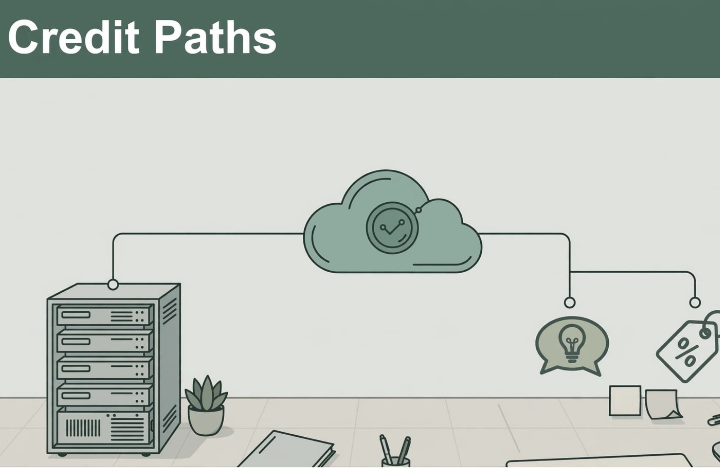
The distinction matters because an investor’s advertised AWS perk may be the same Activate opportunity available through your accelerator. Two organizations offering access don’t necessarily create two credit balances.
Meanwhile, a software subscription discount can reduce a different expense alongside your cloud credits. Its value depends on whether you need the product and what the discount covers.
Include implementation time and paid add-ons when calculating software savings. A free subscription can still require setup work, so its headline price doesn’t capture its full cost.
How AWS Activate credits work for startups
AWS’s published eligibility generally includes being pre-Series B, founded within the past 10 years, and having a functioning company website. The linked AWS account must use the Paid Tier Plan. Where applicable, the latest funding round generally must fall within the preceding 12 months.
Founders and Portfolio offer different routes
Activate Founders is the direct route for eligible self-funded startups. Published credits start at $1,000, with selected startups qualifying for awards up to $5,000.
Activate Portfolio requires affiliation with an AWS Activate Provider and its Organization ID, also called an Org ID. Providers include participating accelerators, angel investors, and venture capital firms.
AWS currently advertises Portfolio offers up to $200,000, although some AWS pages show $100,000. These advertised amounts aren’t guaranteed awards. The provider package, startup eligibility, and AWS approval determine the offer.
Previous awards can affect your next application
AWS says Founders benefits are available once. Eligible Portfolio startups may reapply under conditions that include continued provider affiliation and requesting more than their previous approved amount.
AWS illustrates the difference with a $10,000 award followed by approval at the $100,000 level: the additional credit is $90,000.
That example explains why credits stacking needs careful accounting. A higher approved amount doesn’t necessarily mean another full award lands beside your existing balance.
A practical plan for combining startup cloud credits and perks
Build one benefits register before submitting another application. Keep AWS awards separate from subscription discounts and advisory support.
- Record each existing award, its approved amount, remaining balance, receiving AWS account, and expiry date.
- Identify which of your investors, accelerators, or startup organizations participate as AWS Activate Providers.
- Request the relevant provider’s Org ID and sponsored package details.
- Compare that package with your previously approved credits, rather than adding advertised amounts together.
- Apply through Founders or Portfolio using an AWS Builder ID, your startup details, and the intended AWS account.
For an eligible self-funded startup without previous Activate credits, Founders provides a direct starting point at $1,000. Later provider affiliation creates a reason to assess Portfolio eligibility.
The application sequence doesn’t establish an additive entitlement. A subsequent request must satisfy AWS’s prior-award rules, and the approved amount determines the additional credit.
For application assistance, the AWS credits application service describes a managed route.
Also record who owns each benefit internally. Your engineering lead may manage cloud usage, while another teammate owns software subscriptions. Assigning responsibility helps prevent duplicate applications and missed renewal dates.
Avoid expired credits, surprise costs, and stacking assumptions

Match usage to the expiry window
AWS Activate credits generally expire within one to two years, depending on the package. Record the expiry attached to your award and plan eligible workloads within that window.
Credits automatically offset eligible new charges until they’re exhausted or expire. They don’t reimburse historical bills. Also, keep the receiving AWS account in your register, because an award belongs to an account rather than an informal company-wide pool.
Avoid accelerating unnecessary workloads merely to consume a balance. Unused credits don’t justify infrastructure you wouldn’t otherwise need.
Budget for charges credits won’t cover
AWS promotional credits don’t cover every service or fee. The specific offer and AWS Promotional Credit Terms define eligible charges and exclusions.
Build your forecast around expected usage before credits, then show the temporary offset separately. That makes the eventual cash requirement visible.
Software perks deserve the same treatment: include implementation effort and any required upgrades. Credits stacking reduces selected expenses for a limited period; it doesn’t replace a sustainable operating budget.
Make Every Benefit Count Once
The strongest startup benefits plan identifies each real saving without counting the same AWS opportunity twice. Provider access, approved cloud credits, and software discounts belong in separate categories.
Treat AWS applications as eligibility-based awards, not guaranteed stacking. Keep approved amounts, receiving accounts, and expiry dates together, then plan usage against them. Your budget should remain workable after the credits run out.

Leave a Reply