In the current mobile landscape, the “3D-first” user interface is moving from a trend to a standard. However, for the average developer, the bridge between a 2D concept and a 3D implementation remains cluttered with technical debt. The real challenge isn’t just “making a model”; it’s creating an asset that maintains high frame rates on a mid-range smartphone while integrating seamlessly into a fast-paced CI/CD (Continuous Integration/Continuous Deployment) pipeline.
The next generation of instant 3D model generation is solving this by shifting the focus from simple geometry creation to algorithmic interoperability.
The Performance Gap in Mobile 3D
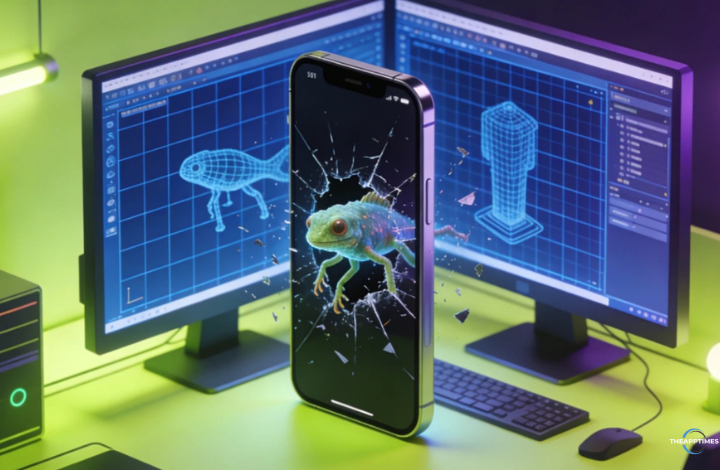
For an indie developer, the nightmare isn’t a lack of assets; it’s an unoptimized asset. A model with an uneven vertex distribution can cause significant draw-call overhead and thermal throttling on mobile devices. Historically, this meant hours of manual “decimation” and “re-topologizing”—technical chores that drain development sprints.
Neural4D’s approach to asset creation bypasses this manual cleanup. By utilizing a reconstruction engine that understands surface flow, the system generates meshes that are inherently structured for real-time rendering. This allows a developer to go from a reference image to a functional, mobile-ready asset in less time than it takes to compile a medium-sized project.
Ensuring “Production-Ready” Integrity
The term “AI-generated” often carries a stigma of broken UV maps and overlapping faces. In a professional build, these errors are catastrophic, breaking shaders and lighting bakes. This is why the shift toward production-ready 3D assets is so vital.
By focusing on logical geometric loops—specifically designed to mirror the way a human artist would build a model—Neural4D ensures its outputs are compatible with standard rigging tools and shaders. Whether you are using a basic Lambertian material or a complex PBR (Physically Based Rendering) stack in Unity, the geometry behaves predictably. This reliability is what allows a small team to treat AI-generated models as a stable part of their production library rather than a gamble.
API-First Creativity: Automating the Pipeline
The most significant shift for 2026 is the movement away from manual web-interface uploads and toward pipeline integration. For developers, the real power lies in the ability to call a 3D reconstruction as an asynchronous function within their own build environment.
By leveraging Neural4D’s developer-centric infrastructure, studios can automate the conversion of large-scale 2D concept libraries into a unified 3D database. This “headless” approach to content creation means that the creative team can focus on art direction, while the heavy lifting of geometric reconstruction happens automatically in the background, triggered by a simple commit or an API call.
Conclusion: Leveling the Engineering Playing Field
Mobile 3D development is evolving from a specialized craft into a standardized engineering workflow. By adopting advanced reconstruction tools that prioritize structural integrity over raw speed, developers can finally bridge the gap between imagination and execution. In a world where visual assets are the primary language of user engagement, having a reliable, automated pipeline is no longer a luxury—it’s the new baseline for successful app deployment.

Leave a Reply